Beautiful paint colors, Dennis!
I wondered about that, but the patterning on the abdomen didn’t look right from the photos here:
Looks more waspish to me, but I am no expert. Having said that, the wings do look more like a fly 
I think it’s a Yellow Shouldered Stout Hover Fly (Simosyrphus grandicornis)
2 Likes


2 Likes


Hi Dawn, @Eva inspired me to search for “Hover Flies of W. Australia”.
2 Likes
That’s great, because @Karby and @Dawn_SD inspired me to look up “flies that look like wasps” and hover fly is what I found 

2 Likes
Well done Eva  There’s a hover fly that hangs around native bee hives. I always thought they were wasps until I did more research on native bee pests.
This is one image I found of the Family Syrphidae.

These flies want to lay eggs in native bee hives. Another pest is a Phorid Fly that want to do the same thing. Not to mention until recently SHBs
That is correct Jeff. I’m from WA, and we have two very common native species of hover flies here. Simosyrphus grandicornis and Melangyna viridiceps, sometimes called Common halfband. You can tell them apart from the dark thorax of the latter.
These flies are good to have around. They are voracious predators of pests and also prolific pollinators. They are wasp mimics, and also migrate. Very common in this time of year when the hot winds start. I often see clouds of them hovering around on my veggie patch feasting on aphids.
5 Likes
What an amazing community we have here! The absolute opposite of “fake news” and “conspiracy theories”. I am so happy that we have level-headed, patient, knowledgable people, who work hard to find the real answers. In the spirit of the upcoming US celebration of Thanksgiving, thank you to all of you!

3 Likes
Well done Smoke, I need a few of those over her, however we do get a lot of wasps doing a good job patrolling around my vege garden, removing the odd grub. I often see damage to sweet corn plants where grubs used to be, however obviously got carted away by a wasp. The plants normally outgrow the damage.
Wasps have a bad reputation, but not where I’m concerned.
Hi @Dawn_SD Thanks for those words of wisdom.
Well I know that there’s one big winner during Thanksgiving, the turkey that receives the Presidential Pardon.
Hi Jeff you should have them over there in Queensland too. They are widespread in all states. They migrate and maybe they don’t hang around your particular patch? You sound like an observant kind of bloke and I doubt you overlooked them if they were present, or are confusing them with wasps. They are quite small and can be inconspicuous even in their abundance. Information I came across says S. grandicornis is the most common hover fly in Brisbane.
1 Like
Hi Stefan, no they haven’t made their way to Buderim, as far as I can tell. The only ones I’ve seen are the Syrphid variety hanging around my native bee hives.
Another pest in my garden is, would you believe a Ladybird. The 28 Spot Ladybirds feast on the top of potato leaves. If they get to mate, their larvae feast on the underside of the leaves. None got a chance to successfully mate this year, although some were caught in the act.
I found this classic photo.

There is also an image of the larvae.

If it’s if any consolation those ladybirds massacre my potatoes too Jeff. The good thing about them is they’re easy to spot and squash, which is the only way to control them.
1 Like
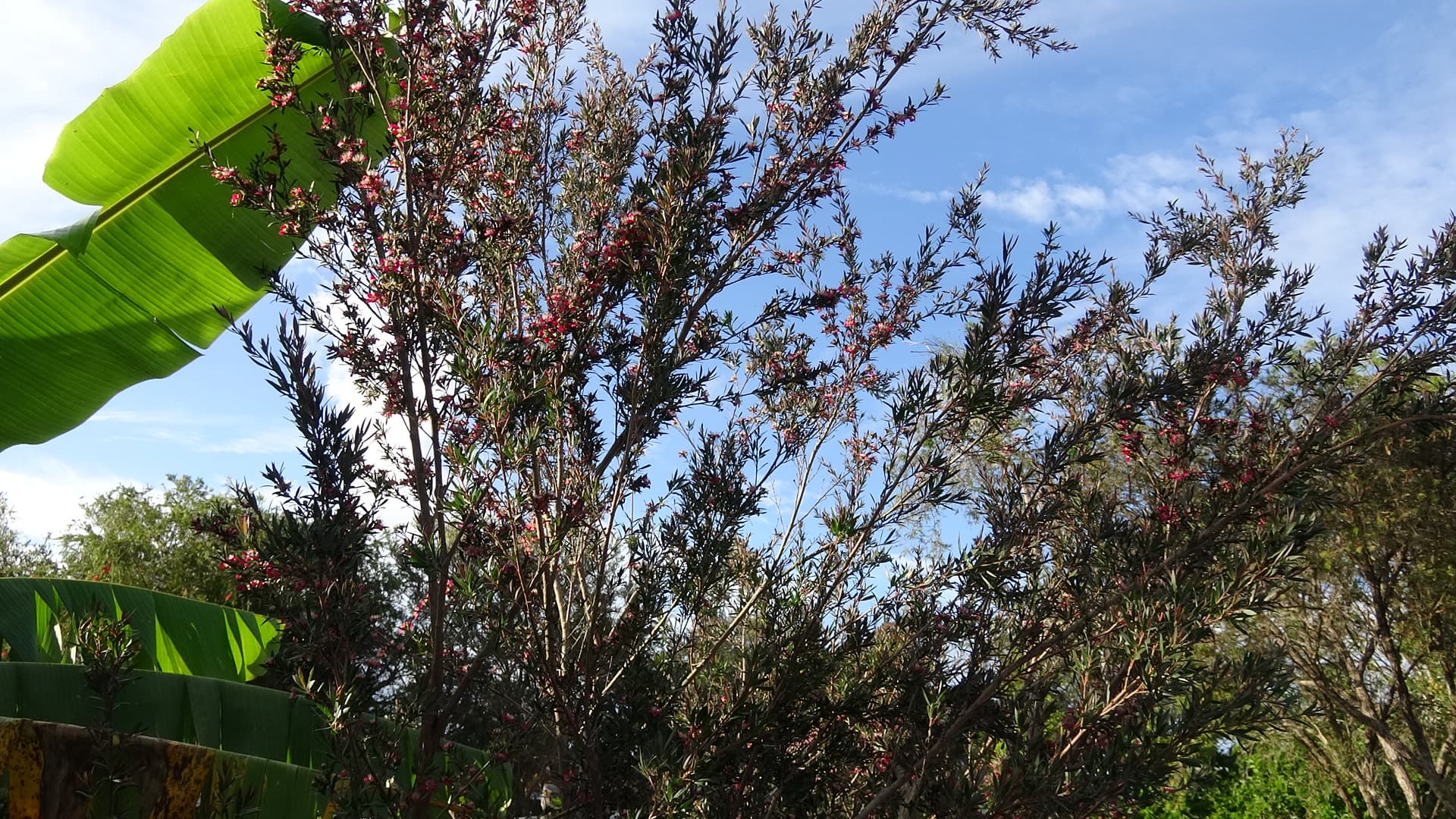
One of my Leptospermums has grown quite big. It’s a “Starry Night”, it is supposed to have white flowers, however I’m not complaining that they’re pink.


3 Likes
Do you get much thixotropic honey from those TeaTrees Jeff or is it just a few specimen you have there?
Hi Stefan, I don’t expect to get any thixotropic honey from the Tea Trees in my garden dedicated to Leptospermums. I have about 10 or eleven plants in this garden. This one is the only one in flower at the moment. Some of the others were in flower early in spring, while this one was yet to produce it’s first ever flower. It’s been in for about 2 years. The others a bit less than 2 years, all from Bunnings. Some of the others are still yet to give a decent display, so I’m looking for a decent display next spring.


